The story
Sergej Pankejeff was a wealthy Russian aristocrat who became severely depressed after family tragedies, including his sister’s suicide. In 1910, he came to Vienna to see Freud.
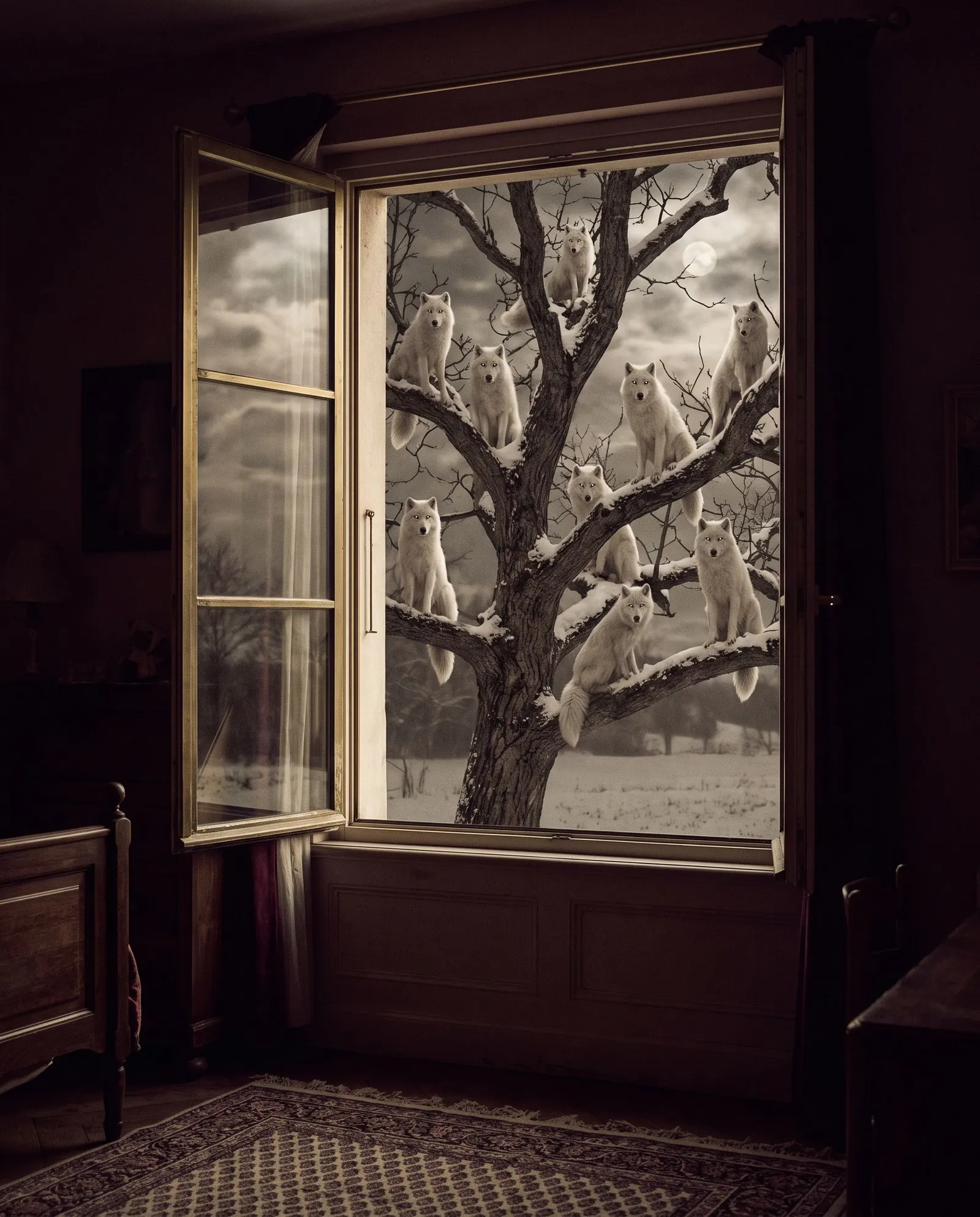
Central to the analysis was a dream from his childhood: his bedroom window opens by itself, and in the walnut tree outside sit six or seven white wolves, staring at him motionless.
What Freud made of it
From this dream, Freud constructed a whole reconstruction: as a toddler, the boy supposedly witnessed his parents having sex, the so-called ‘primal scene’. The case was meant to refute the theories of Jung and Adler and prove that infantile sexuality is at the root of neuroses. Freud set a fixed end date to force the treatment along.
What we know today
In the 1970s, the journalist Karin Obholzer spoke with the elderly Pankejeff. He told her that the interpretation of the wolf dream had always seemed far-fetched to him, and that the analysis hadn’t really helped him. He was treated and financially supported by the psychoanalytic community for decades as ‘living proof’.
What happened next
He lost his fortune after the Russian Revolution and worked as an insurance clerk in Vienna. He painted and wrote down his memoirs. He died in 1979.